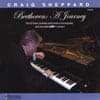
Craig Sheppard’s Beethoven piano sonata cycle was given in Seattle’s Meany Theatre during 2003-04. Entitled ‘Beethoven: A Journey’, the sonatas are played in choronological order as a metaphor ‘for not only our individual journeys, but also for the collective journey of an entire planet’. This lofty ambition is excelled in performances which find Sheppard reaching for the stars so that what can seem like a dutiful trudge through some of music’s greatest pages becomes an exhilarating quest brimming over with zest, insight and affection. This is never Beethoven as we have always known him but sounding as if new-minted, with the dust and patina of stale custom and tradition swept aside with dazzling relish and aplomb.
Above all these are ‘speaking’ performances so that whether blazing or confiding Beethoven’s genius, Sheppard is never less than eloquent, his outsize technique and personality always at the composer’s service whether his character be playful, irascible or profound. True, he can be more testy than speculative in the late sonatas, pent up rather than serene in the spiritual Elysium of so much of Opp 109, 110 and 111. Yet even here his playing is never less than acute, his energy coursing like electricity from point to point, from pylon to pylon. And in Op 106, Beethoven’s most defiant and intimidating keyboard masterpiece, Sheppard achieves an almost palpable sense both of occasion and (most notably in the final fugue) of a composer breaking all known boundaries of expression. Seldom has such music’s cold fury been conveyed with such adrenalin-fuelled energy. In lighter vein try Op 79, which can rarely have been given more ebulliently or characterfully. When has Beethoven sounded in such robust or rude good health? Again, when have you heard a more delectably light-fingered spin through Op 26’s enigmatic finale? Balm or solace indeed after the dark and ceremonial Funeral March. How Sheppard revels in the whimsical Menuetto of Op 22, where the music’s skittish dancing measures are interrupted by alarm bells. What immaculate virtuosity in the finale of Op 10 No 2; what a jaunty and strutting start to Op 2 No 1, a promise of an exceptionally vivid journey to come. Here nothing is taken for granted, everything is brilliantly fresh and alive. You may find more consistent performances on record but there are few more piquantly characterised or, at their finest, more deeply sensitive to the darker recesses of Beethoven’s towering imagination.
Such brio and engagement may remind you at times of William Kapell, America’s greatest pianist, but Craig Sheppard is an entirely individual artist. Presented in recorded sound that has captured all of his immediacy, he has heeded some unforgettable advice. It was, after all, Polonius who turned to his son to say, ‘This above all: to thine own self be true, And it must follow, as the night the day, Thou canst not then be false to any man.’
Roméo Records